
2026-08-28 · cardio vs strength, weight training, aerobic exercise, body composition, muscle preservation, weight loss
Written by Priya Desai
Priya Desai is a WeightFAQ staff writer covering exercise, fitness, and the body-composition side of weight loss. She has written about strength training, HIIT, running, and the best time to exercise, alongside guides to preserving muscle during a deficit, sarcopenic obesity, body recomposition, and creatine. Her body-composition-testing piece walks through DEXA, BIA, and Bod Pod for readers who want more than a scale number, and her articles on plantar fasciitis and fibromyalgia address exercising with pain. Priya writes for readers who want to train usefully without gym pressure or hype.
13 min read
Medically reviewed on Aug 28, 2026
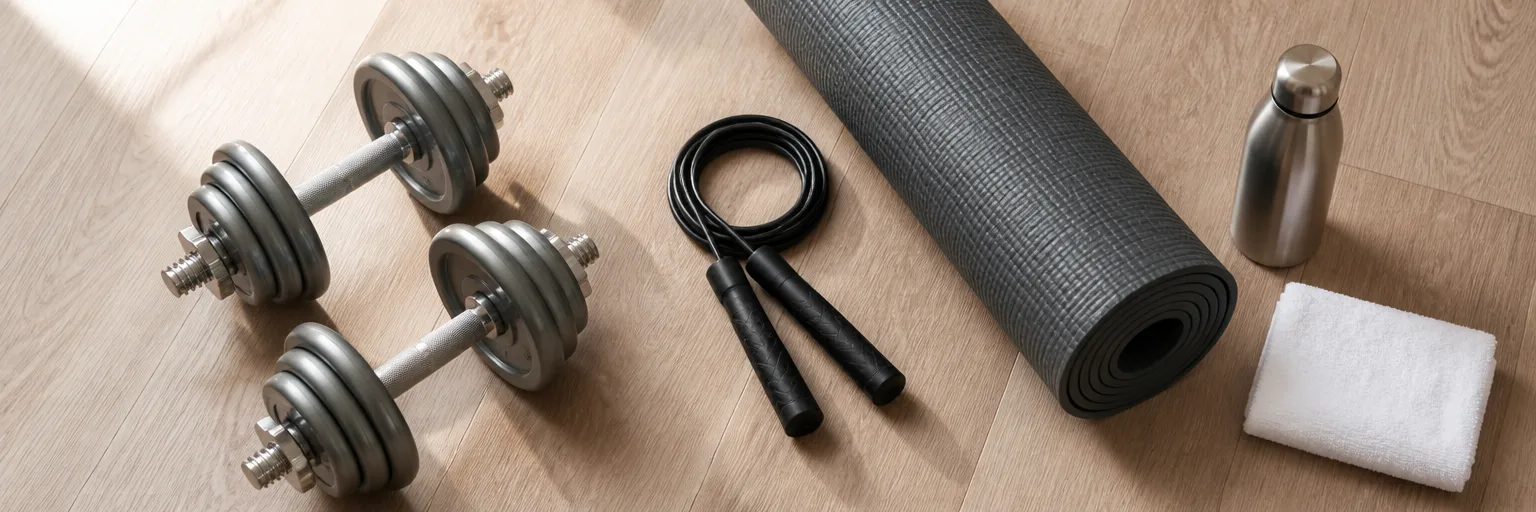
Cardio vs Strength Training for Weight Loss
The one-paragraph answer
At matched training time, moderate cardio produces slightly more raw scale weight loss than resistance training, resistance training reliably preserves the muscle you already have, and combined training gives the best body-composition outcome — for roughly double the weekly time cost. In the best head-to-head trial (Willis 2012 STRRIDE-AT/RT, 8 months) aerobic-only training lost 1.7 kg of body mass, resistance-only gained 0.8 kg (from added lean tissue), and combined lost 1.6 kg while also adding muscle. The correct answer depends on your constraint. If you have three to four hours a week to train and want the best composite outcome, combined wins — build the week off our strength training for weight loss template, the exercise for weight loss weekly-dose matrix, and the preserving muscle during weight loss protein floor. If you have ninety minutes a week and want the scale to move, cardio wins per minute. If you are already 10 to 15 percent lighter than you started and worried about losing more muscle, resistance training and a protein floor are non-negotiable. The rest of this guide walks through the trial evidence, the visceral-fat data, and a four-row decision framework so you can pick the right allocation for your week.
What each modality actually does (mechanism in plain English)
Cardio and resistance training move weight loss in different ways, and the difference matters when you are choosing between them.
Cardio burns direct energy during the session. A 165-pound adult burns roughly 300 to 500 kcal in a 45-minute moderate-intensity effort, and the calories you spend during the workout are essentially the whole story — post-exercise afterburn from steady-state cardio is small (Borsheim 2003, Sports Medicine review). Cardio also improves cardiovascular fitness, insulin sensitivity, and mood, and — when done at an easy zone-2 pace — carries a low enough recovery cost that you can accumulate meaningful weekly volume without draining the rest of your training.
Resistance training burns less energy during the session (a typical 45-minute lift burns 200 to 350 kcal for the same adult), but sends a signal to your body that the muscle you have is doing work and should be preserved. That signal is the mechanism behind every trial in the muscle-preservation literature. Resistance training also raises resting metabolic rate slightly by preserving lean tissue (Hunter 2015, Obesity), and — this matters most during a deficit — it protects against the adaptive drop in energy expenditure that comes with weight loss (MacKenzie-Shalders 2020 review of exercise and RMR).
The one-line version: cardio is the calorie-burning tool, resistance training is the composition-protecting tool, and they do different jobs.
The best head-to-head trial: STRRIDE-AT/RT (Willis 2012)
The single most useful trial for this question is the Duke University STRRIDE-AT/RT study (Willis 2012, Journal of Applied Physiology), an 8-month randomized controlled trial in 234 adults with overweight or obesity. Participants were assigned to one of three arms with no dietary intervention:
- Aerobic-only — roughly 12 miles per week of jog-equivalent training, about 133 minutes per week.
- Resistance-only — three full-body sessions per week (three sets of 8 to 12 reps on eight machines).
- Combined — both programs, effectively double the weekly training time.
After 8 months the aerobic-only group lost the most total body mass and the most fat mass (−1.7 kg body mass, −1.7 kg fat). The resistance-only group gained 0.8 kg of body mass — because they added roughly 1 kg of lean tissue without losing fat. The combined group lost 1.6 kg of body mass, gained lean tissue, and produced the largest total fat loss of the three groups, but at roughly double the training time.
The practical read: at matched training time, cardio is more efficient for pure scale loss. Combined is best for body composition. Resistance training alone, without a dietary deficit, does not drive fat loss — it changes what your body is made of, not how much it weighs. The companion trial (Slentz 2011, J Appl Physiol, STRRIDE aerobic dose-response) confirmed that within aerobic training, higher weekly mileage produced larger fat loss in a roughly linear fashion up to about 20 miles per week.
What Church 2010 DREW adds about the low-end dose
Not everyone can commit to 133 minutes of jogging per week, and the Church 2010 DREW trial (JAMA, n=464 sedentary postmenopausal women with overweight) is the best evidence for what happens at lower doses. Participants were randomized to 4, 8, or 12 kcal per kilogram of body weight per week of supervised aerobic training — roughly 72, 136, and 192 minutes of moderate walking per week — with no dietary change.
All three exercise groups lost significantly more weight than the no-exercise control, and even the 72-minute-per-week group produced measurable body-mass reduction and fitness gains. More time helped, but with diminishing returns — the jump from 72 to 136 minutes bought more than the jump from 136 to 192.
The practical read: even modest cardio doses beat zero, and a daily walk is a real weight-loss lever, not a placeholder while you wait to start “real” exercise. Readers building their cardio floor from a walking base should start with our walking for weight loss protocol.
What resistance training does that cardio cannot
Three converging lines of evidence show resistance training does something cardio cannot: it protects lean mass in a deficit, and in some cases it adds lean mass despite the deficit.
Longland 2016 (Am J Clin Nutr) put 40 young men on a punishing 40 percent energy deficit for 4 weeks combined with six weekly sessions of resistance training and high-intensity intervals. The high-protein group (2.4 g/kg/day) gained 1.2 kg of lean tissue while losing 4.8 kg of fat. The lower-protein group held lean mass roughly flat and lost slightly less fat. Both groups were resistance-trained; the difference was protein.
Wycherley 2012 (Am J Clin Nutr), a meta-analysis of 14 randomized trials totaling 1,053 adults, showed that adding resistance training to a hypocaloric diet produced greater lean-mass retention and better cardiometabolic outcomes than diet alone at matched fat loss.
Villareal 2011 (New England Journal of Medicine), a one-year trial in 107 older adults with obesity, compared diet-plus-aerobic vs diet-plus-resistance vs diet-plus-combined training. The combined group was the only arm that both lost fat and improved physical function — the outcome that matters most for older adults trying to avoid frailty.
For the unified training-and-protein protocol built on these trials, see our preserving muscle during weight loss guide and its companion pillar strength training for weight loss; for the wider weekly exercise for weight loss template that folds cardio, strength, and NEAT into one plan, see the umbrella pillar. Older adults with a sarcopenia-obesity picture — high body fat plus low muscle mass — should also read sarcopenic obesity for the function-first framework.
Visceral fat: what the head-to-head data show
Visceral fat — the deeper abdominal fat around the organs, distinct from the subcutaneous fat you can pinch — is the fat depot most tightly linked to metabolic disease. It also responds differently to different training modalities.
Skrypnik 2015 (Biomedical Research International) randomized 44 women with abdominal obesity to 12 weeks of endurance training or resistance training at matched three-session-per-week frequency. Both groups lost weight; the endurance group lost significantly more visceral fat by MRI. Ohkawara 2007 (International Journal of Obesity) meta-analyzed 40 aerobic training studies and found a dose-response reduction in visceral fat starting at roughly 10 MET-hours per week — about 150 minutes of moderate walking.
The practical read for readers whose main concern is visceral fat or belly fat: cardio has the stronger head-to-head evidence for visceral-fat reduction at matched training time. Resistance training still contributes to total fat loss and preserves the muscle underneath, but if the specific goal is shrinking waist circumference and reducing visceral fat, the cardio dose should not be shortchanged.
The decision framework by constraint
The right allocation between cardio and strength depends less on which modality is “better” and more on which constraint is actually binding for you. Four common cases cover most readers.
| Your constraint | Recommended allocation |
|---|---|
| ≤3 hours per week available | 2 short resistance sessions (~40 min each) + a daily 20-to-30-minute walk. Resistance protects composition on the smallest possible weekly time budget. |
| 4 to 6 hours per week available | 2 resistance sessions + 2 cardio sessions (zone-2 or one HIIT session per week) + a daily step floor. The composite-outcome sweet spot. |
| Joints ache, plantar fasciitis, or knee pain | Resistance training (which typically helps joint pain when programmed well) + swimming, indoor cycling, elliptical, or rowing for cardio. Skip running until pain resolves. See plantar fasciitis and weight loss. |
| ≥15% body-weight loss already, worried about muscle | 3 resistance sessions per week + protein floor of 1.6 to 2.2 g/kg + shorter, easier cardio. Muscle preservation is now the binding constraint, not calorie burn. |
Two of these constraints deserve a note. If you have joint pain, the trap is assuming cardio equals running — swimming, cycling, elliptical, and rowing are all cardio, and all four spare the ankles and knees while producing the same cardiovascular and calorie-burn effect. And if you are already deep into a weight-loss effort, adding more cardio at the expense of lifting is one of the most reliable ways to lose the muscle you have left. Protect it.
What “afterburn” (EPOC) actually adds
The claim that “cardio burns X calories but weights burn all day” gets repeated in fitness marketing, and it is oversold.
Borsheim 2003 (Sports Medicine review of EPOC) concluded that post-exercise afterburn from resistance training is typically under 10 percent of the session’s own energy expenditure. A hard 45-minute lift burning 300 kcal adds roughly 20 to 30 kcal of extra spend across the next 24 hours. HIIT EPOC is somewhat larger — roughly 30 to 100 kcal per day for the day after an intense session — but still small in the context of total daily energy expenditure.
The honest read: the metabolic benefit of resistance training is the muscle you keep, not the afterburn you get. A kilogram of preserved lean tissue is roughly 15 to 20 kcal per day of resting metabolic rate you do not lose (Hunter 2015, Obesity). Multiplied across 3 to 5 kg of muscle protected during a full weight-loss effort, that is 45 to 100 kcal per day of resting expenditure preserved — permanent, durable, and worth far more than the single-digit-percent afterburn from any one session.
The dose-response minimums that actually work
The 2018 US Physical Activity Guidelines (Piercy 2018, JAMA) — updated after review of hundreds of trials — landed on a specific weekly floor for adults: 150 to 300 minutes of moderate-intensity aerobic activity per week, plus 2 days per week of muscle-strengthening activity that hits all major muscle groups.
The evidence behind those numbers is not arbitrary. Below 150 minutes per week of cardio, there is still real benefit — reduced all-cause mortality, better cardiometabolic risk factors — but weight and body-composition change slow markedly. Below 60 minutes per week, meaningful weight change essentially requires the deficit to come entirely from food, because the exercise contribution is too small to matter on its own.
For resistance training, the 2 days per week floor is the muscle-preservation threshold in a deficit; more is better up to about 3 to 4 sessions per week, after which recovery becomes the binding constraint. The dose response for resistance training in a cut is much flatter than in a surplus — you do not need to double your lifting to double your muscle-preservation benefit.
The honest answer for most readers
If you have 3 to 4 hours per week to train and want the best composite outcome — fat loss, muscle preserved, cardiometabolic health improved — the answer is combined training on this template:
- 2 resistance sessions (~40 minutes each): full-body, compound-lift-focused, 6 to 10 hard sets per major muscle group across the week.
- 2 to 3 cardio sessions (~30 minutes each): most at zone-2 intensity, optionally one short HIIT session per week if you enjoy them.
- Daily step floor of 7,000 to 10,000 steps, which contributes more total weekly energy expenditure than the structured cardio for most readers.
Cardio drives the scale, resistance protects composition, and both drive adherence via variety (Hansen 2005 Obesity adherence data — mixed-modality programs have measurably lower dropout than single-modality programs). If you want an equipment-light version of this template that runs entirely at home, our home workouts for weight loss plan lays out a bodyweight-plus-band progression that lands roughly the same weekly stimulus. If a treadmill is your primary cardio tool, the treadmill workout for weight loss guide covers the 5-session decision table (steady walk, 12-3-30, walk-jog intervals, hill repeats, tempo) and the per-session kcal math that fits directly into the 2-to-3 cardio sessions above. If you would rather have both stimuli programmed for you inside a scheduled small-group class — Metcon-style intervals stacked on strength work, with a coach enforcing form — see CrossFit for weight loss, which walks through the 300–500 kcal per class calorie math, the 2.3–3.1-per-1,000-hour injury profile, and the community-effect adherence data that makes the premium $150–250 monthly cost defensible for many readers.
If your cardio slot is a racket-sport session — the fastest-growing modality in this category — see pickleball for weight loss for the ~4.1-MET recreational-doubles vs ~6.4-MET competitive-singles kcal-per-hour math and why 2 short lifting sessions per week are non-negotiable alongside 3+ court sessions. For the tennis side of the racket-sport picture — the ~8.0-MET competitive-singles vs ~6.0-MET doubles kcal-per-hour math, the Fernandez-Fernandez 2009 time-motion evidence that only ~20% of a doubles match is ball-in-play, and the mandatory 2 strength days for tennis elbow, calf/Achilles, and rotator cuff protection — see tennis for weight loss.
One final note on what not to chase. Fasted morning cardio, hour-long HIIT classes done daily, and “fat-burning zone” heart-rate targeting all get sold as accelerators. They are not — see our fasted cardio for weight loss coverage for the honest read on fasted training, and the HIIT pillar for what daily HIIT actually costs in recovery. The evidence-based combined template above outperforms all of them, and it is sustainable across the years it actually takes to lose weight and keep it off.
Sources at a glance
- Willis LH et al. Effects of aerobic and/or resistance training on body mass and fat mass in overweight or obese adults (STRRIDE-AT/RT). Journal of Applied Physiology (2012).
- Slentz CA et al. Effects of aerobic vs resistance training on visceral and liver fat stores, liver enzymes, and insulin resistance by HOMA in overweight adults from STRRIDE-AT/RT. Journal of Applied Physiology (2011).
- Church TS et al. Effects of different doses of physical activity on cardiorespiratory fitness among sedentary, overweight or obese postmenopausal women with elevated blood pressure: DREW randomized controlled trial. JAMA (2010).
- Longland TM et al. Higher compared with lower dietary protein during an energy deficit combined with intense exercise promotes greater lean mass gain and fat mass loss: a randomized trial. American Journal of Clinical Nutrition (2016).
- Wycherley TP et al. Effects of energy-restricted high-protein, low-fat compared with standard-protein, low-fat diets: a meta-analysis of randomized controlled trials. American Journal of Clinical Nutrition (2012).
- Villareal DT et al. Weight loss, exercise, or both and physical function in obese older adults. New England Journal of Medicine (2011).
- Skrypnik D et al. Effects of endurance and endurance strength training on body composition and physical capacity in women with abdominal obesity. BioMed Research International (2015).
- Ohkawara K et al. A dose-response relation between aerobic exercise and visceral fat reduction: systematic review of clinical trials. International Journal of Obesity (2007).
- Borsheim E, Bahr R. Effect of exercise intensity, duration and mode on post-exercise oxygen consumption. Sports Medicine (2003).
- Piercy KL et al. The Physical Activity Guidelines for Americans. JAMA (2018).
- Hunter GR et al. Resistance training conserves fat-free mass and resting energy expenditure following weight loss. Obesity (2015).
- MacKenzie-Shalders K et al. The effect of exercise interventions on resting metabolic rate: a systematic review and meta-analysis. Journal of Sports Sciences (2020).