
2026-07-08 · sarcopenic obesity, sarcopenia, aging, muscle mass, resistance training, older adults, body composition
Written by Priya Desai
Priya Desai is a WeightFAQ staff writer covering exercise, fitness, and the body-composition side of weight loss. She has written about strength training, HIIT, running, and the best time to exercise, alongside guides to preserving muscle during a deficit, sarcopenic obesity, body recomposition, and creatine. Her body-composition-testing piece walks through DEXA, BIA, and Bod Pod for readers who want more than a scale number, and her articles on plantar fasciitis and fibromyalgia address exercising with pain. Priya writes for readers who want to train usefully without gym pressure or hype.
15 min read
Medically reviewed on Jul 8, 2026
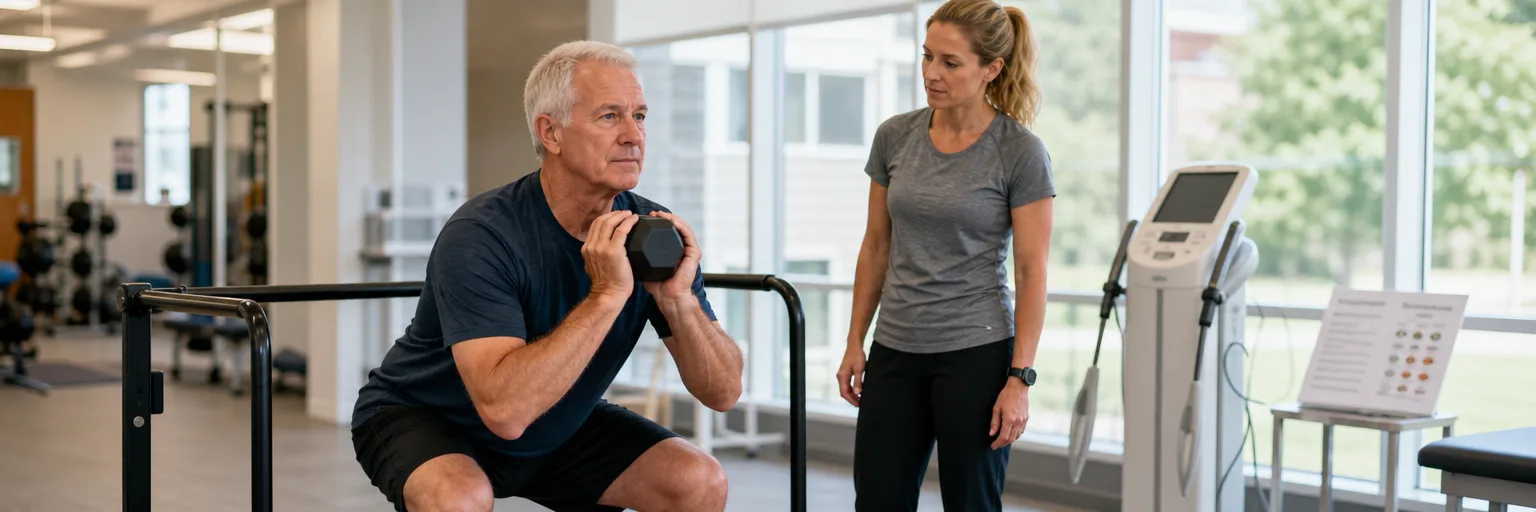
Sarcopenic Obesity: Why “Skinny Fat” Adults and “Big and Weak” Older Adults Share the Same Problem
Quick answer
Sarcopenic obesity is the co-occurrence of low skeletal-muscle mass and function (sarcopenia) with excess body fat, formally defined by the 2022 ESPEN and EASO consensus (Donini 2022, Clinical Nutrition and Obesity Facts). It affects roughly 5 to 20 percent of adults aged 65 and older depending on the definition used (Batsis 2013, International Journal of Obesity; Batsis 2018, Obesity) and carries higher all-cause mortality, more falls and fractures, more disability, and worse metabolic outcomes than either sarcopenia or obesity alone (Batsis 2014, Journal of the American Geriatrics Society; Zhang 2019, BMC Geriatrics).
The intervention with the largest effect size — by a wide margin — is progressive resistance training, ideally two to three times per week, paired with 1.2 to 1.6 g/kg of protein per day and a moderate calorie deficit rather than an aggressive one (Villareal 2011 and Villareal 2017, New England Journal of Medicine). This article covers the formal diagnosis, the four mechanisms driving the phenotype, what the evidence actually shows, and a five-step treatment protocol adults and clinicians can implement together. See sarcopenia and weight loss for the sarcopenia workup on its own and weight loss for older adults for the wrap-around geriatric framing.
Who this is for — and who it is not for
Best fit. Adults over 50 who fit the sarcopenic-obese phenotype (low strength or measured low muscle mass, plus elevated BMI or waist circumference), adults over 65 planning any intentional weight loss, adults on a GLP-1 medication who are concerned about muscle loss, post-menopausal women with a rising waist circumference and softening grip strength, adults recovering from prolonged illness or hospitalization who have regained weight as fat rather than muscle, and clinicians wanting a practical protocol that respects the ESPEN/EASO consensus.
Not a fit as marketed. Younger, weight-stable adults with visible abdominal fat but normal grip strength do not have sarcopenic obesity — they have obesity. Adults with unintentional weight loss and progressive weakness need cancer, cachexia, thyroid, and inflammatory workups before this protocol applies (see cancer and weight loss).
Talk to a clinician first. Adults with chronic kidney disease (protein targets require nephrology input), recent falls or vertebral fractures, unstable cardiovascular disease, active inflammatory arthritis flares, or steroid myopathy from chronic corticosteroid use.
How sarcopenic obesity is defined
The 2022 ESPEN-EASO consensus is the diagnostic standard, and it uses a two-step algorithm. The table below summarizes the criteria.
| Step | What it measures | Threshold | Tools | Notes |
|---|---|---|---|---|
| Step 1 — Screening | Suspected sarcopenia in a patient with obesity | SARC-F ≥ 4, OR obesity by BMI/waist circumference AND clinical suspicion of low muscle | 5-item SARC-F, BMI, waist circumference | Triggers the full workup |
| Step 2A — Muscle strength | Low grip strength or lower-body strength | Grip < 27 kg (men) or < 16 kg (women), OR 5-times chair-rise > 15 sec | Handheld dynamometer, stopwatch and chair | EWGSOP2-aligned cut-points |
| Step 2B — Altered body composition | Low skeletal-muscle mass relative to body weight AND elevated fat mass | Sex-specific: e.g., SMM/BW < 37% (men) or < 27.6% (women); fat mass elevated by DXA or BIA | DXA, BIA, or CT | Confirms the two-axis phenotype |
| Staging | Functional and complication burden | Stage I — no complications; Stage II — falls, disability, or metabolic disease | Clinical assessment | Guides treatment intensity |
| Distinction | Sarcopenic obesity vs adjacent phenotypes | Distinct from normal-weight obesity (low muscle, normal BMI, high body-fat) and obese sarcopenia (older lay term) | Clinical judgment | Use ESPEN/EASO term for medical accuracy |
Sarcopenic obesity is not the same as normal-weight obesity — that phenotype describes adults with a normal BMI but a high body-fat percentage, often without measured low strength. The two overlap in the “skinny fat” reader who arrives with low grip strength and a soft chair-rise time. Both are distinct from obesity plus deconditioning, which is common and does not by itself meet the sarcopenic-obesity threshold. See body fat percentage for the body-composition framing, and our body composition testing guide for the accuracy trade-offs between DEXA, BIA, and CT when confirming the two-axis phenotype.
The four drivers of sarcopenic obesity
Four biological drivers explain why the two problems compound rather than sit side-by-side.
1. Age-related anabolic resistance
Older muscle responds less to each gram of protein and each unit of mechanical loading. Wolfson 2020 in JAMA Network Open and the underlying Volpi 2013 Journals of Gerontology work both show muscle protein synthesis in adults over 50 is roughly half of what a 25-year-old sees for the same protein bolus. That is why the per-meal protein threshold (0.3–0.4 g/kg per meal) matters more with age — hitting 25 to 40 g of protein at each meal drives more synthesis than the same daily total loaded into dinner. See protein intake for weight loss.
2. Sedentary behavior and mechanotransduction loss
Skeletal muscle needs a mechanical signal to maintain fiber cross-section. Sitting more than 8 to 10 hours a day, low daily step counts, and the absence of resistance training remove that signal, and myofibrillar protein synthesis rates drop. This is the mechanism behind the durable finding that inactivity drives muscle loss faster than age itself.
3. Chronic low-grade inflammation from adipose tissue
Excess adipose — especially visceral fat — produces inflammatory cytokines and adipokines that suppress muscle protein synthesis and accelerate proteolysis. See visceral fat for the metabolic mechanism. This is why sarcopenic obesity progresses faster than either problem alone: the fat mass drives muscle loss on top of the age effect.
4. Ectopic muscle fat (intra-myocellular lipid, IMCL)
On CT and MRI, aging muscle shows “marbling” — fat infiltration within and between muscle fibers. This intra-myocellular lipid impairs strength independently of muscle mass, so an older adult can have a normal DXA lean-mass reading and still show measurable weakness driven by fat infiltration. The clinical signal is a grip strength below cut-point despite a normal-looking DXA.
What the evidence actually shows
Prevalence. Batsis 2013 (Int J Obes) analyzed NHANES data and reported prevalence between 5 and 20 percent of US adults aged 65 and older, depending on the definition used. The 2018 update (Batsis 2018, Obesity) reviewed international cohorts and reproduced the range.
Independent mortality signal. Batsis 2014’s Journal of the American Geriatrics Society analysis of NHANES III followed adults for a median 14 years and found sarcopenic-obese older adults had higher all-cause mortality than adults with sarcopenia alone, obesity alone, or neither. Zhang 2019’s meta-analysis in BMC Geriatrics pooled 23 cohorts and reproduced the finding — the mortality signal is independent of either constituent condition.
Diabetes and metabolic-syndrome overlap. Srikanthan 2010 (Journal of Clinical Endocrinology and Metabolism) analyzed NHANES and found low muscle mass predicts insulin resistance independent of body-fat percentage. Kim 2010 (Diabetes Care) reported sarcopenic-obese adults had a threefold higher odds of metabolic syndrome than adults with neither condition.
Falls, fractures, and disability. Baumgartner 2004 (Obesity Research) tracked New Mexico Elder cohort participants over eight years and found sarcopenic-obese adults had higher incident disability and mobility limitation than either condition alone. Rolland 2009 (Journal of Nutrition, Health, and Aging) reproduced the mobility signal in French EPIDOS women.
GLP-1 caveat. The DEXA substudy of the STEP-1 semaglutide trial (Wilding 2021, NEJM) showed 25 to 40 percent of the weight lost on semaglutide was lean mass. In a healthy 45-year-old, that proportion is unremarkable. In a 70-year-old already near sarcopenic-obese cut-points, that absolute lean-mass loss can push function across a threshold. Lundgren 2021 (NEJM) randomized post-weight-loss adults to liraglutide with or without resistance training and showed the RT arm preserved lean mass and functional gains; the medication alone did not. Current ADA and AACE guidance recommends pairing every GLP-1 prescription with resistance training and 1.2 to 1.6 g/kg protein, especially in older adults.
Time course
The table below shows how sarcopenic obesity develops and how the protocol changes the trajectory.
| Age or time point | Muscle mass trajectory | Fat trajectory | Function | Intervention emphasis |
|---|---|---|---|---|
| Age 25 (baseline) | Peak muscle mass and strength | Normal fat distribution | Full function | Habits, activity levels |
| Age 40 | Anabolic resistance first measurable | Waist beginning to rise | Full function | Protein 1.0 g/kg, RT 2×/wk |
| Age 50 | ~0.5–1% muscle loss per year begins | Fat mass rising | Grip may still be normal | Protein 1.2 g/kg, RT 2–3×/wk |
| Age 65 | Sarcopenia thresholds crossed in the inactive | Sarcopenic obesity common | Fall-risk threshold | Screen, treat, re-screen |
| After 6 mo weight loss | Depends entirely on RT and protein | Fat loss (goal) | Improved if RT+protein | Combined diet + RT + protein |
| After 12 mo maintenance | Preserved with continued RT | Held with continued deficit-then-maintenance | Improved function | Continued RT and protein; re-screen annually |
Five-step protocol for treating sarcopenic obesity
The order matters. Adults who start with the deficit and add training later usually lose function before they recover it. Adults who start with training and protein and then add a moderate deficit generally hold or improve function.
- Protein target 1.2–1.6 g/kg/day, distributed across 3–4 meals of 0.3–0.4 g/kg per meal. The PROT-AGE consensus (Bauer 2013) and Wolfson 2020 both support the total and per-meal targets. Front-loading breakfast is usually the highest-leverage change because most adults under-eat protein in the morning. See protein intake for weight loss for sources and timing.
- Progressive resistance training 2–3× per week — squat, hinge, push, pull, carry. Villareal 2011 and Villareal 2017 (NEJM) both showed combined RT plus diet outperformed diet alone in obese older adults. Start with body-weight or dumbbell exercises; progress load weekly. See strength training for weight loss for templates.
- Moderate deficit only — 250 to 500 calories per day, or roughly 0.5 percent of body weight per week. Aggressive deficits accelerate sarcopenia; slower loss preserves muscle. See adaptive thermogenesis and metabolic adaptation for the underlying physiology.
- Creatine 3–5 g/day (optional but low-cost) in adults with normal kidney function. Chilibeck 2017 and Candow 2019 both showed a small additive strength and lean-mass benefit on top of RT. See creatine and weight loss.
- Vitamin D and calcium sufficiency. Bischoff-Ferrari 2020 (JAMA) reported the DO-HEALTH trial showed vitamin D 2,000 IU/day plus omega-3 plus a home exercise program produced modest but real functional gains in older adults; the muscle-function signal appears at serum 25(OH)D above 30 ng/mL. Calcium 1,000–1,200 mg/day supports the bone side of the bone-muscle unit.
How the treatments compare
| Approach | Mechanism | Typical impact on lean mass / strength | Notes |
|---|---|---|---|
| Diet alone (moderate deficit, no RT) | Fat loss driven by energy deficit | Lean mass loss 25–40% of total weight lost; strength typically drops | Wrong intervention for sarcopenic obesity |
| Resistance training alone (no deficit) | Mechanical loading | 10–20% strength gain; ~1–2 kg lean mass in 12 weeks; fat mass unchanged | Fat mass persists |
| Combined diet + RT (Villareal 2011) | Deficit + loading | Best composite outcome — fat loss preserved lean mass and improved function | Reference protocol |
| Whey protein alone (no RT) | Substrate for MPS | Modest lean-mass benefit only; no functional gains without training | Necessary but insufficient |
| Creatine addition to RT | Phosphocreatine + intracellular water | Small additive strength and lean-mass gain | Cheap, safe with normal kidney function |
| GLP-1 + RT (Lundgren 2021) | Deficit via appetite suppression + loading | Preserves lean mass and function during large weight loss | Do not use GLP-1 monotherapy in sarcopenic-obese adults |
Special situations
Bariatric surgery patients
Post-bariatric adults lose lean mass fastest in the first 12 months, and the sarcopenic-obese phenotype is common at 12 to 24 months if muscle preservation is not addressed. The same protocol applies — 1.2 to 1.6 g/kg protein (harder on a smaller stomach; use whey and lean-meat sources), resistance training 2 to 3 times a week starting once cleared, and vitamin and mineral sufficiency per the bariatric protocol. See bariatric post-op vitamin and nutrition protocol and weight loss for older adults.
On GLP-1 or GIP-GLP-1 medications
Resistance training is non-negotiable. Wilding 2021 (NEJM) put a number on the lean-mass share (25–40 percent of total weight lost), and Lundgren 2021 (NEJM) showed RT during the medication preserves the muscle floor. Adults over 65 on semaglutide, tirzepatide, or liraglutide should have a baseline SARC-F, grip strength, and chair-rise time, plus a 12-week re-screen. See GLP-1 weight loss overview and the preventing muscle loss on GLP-1 medications three-lever protocol.
Hormone-replacement therapy
Testosterone replacement in men with clinical hypogonadism produces modest lean-mass gains, but effect sizes are smaller than RT and cardiovascular and prostate safety questions remain — not first-line for sarcopenic obesity (see low testosterone and weight loss). Menopausal hormone therapy in women has muscle-supportive signals but is prescribed for menopause symptoms, not sarcopenia (see menopausal hormone therapy and weight). Growth hormone and DHEA have essentially failed the older-adult trials and carry real harms.
Chronic kidney disease
The 1.2 to 1.6 g/kg protein target does not automatically apply. Sarcopenic-obese CKD requires nephrology co-management. Adults with CKD not on dialysis often stay at 0.6 to 0.8 g/kg to slow progression; sarcopenic-obese adults with CKD sit in a difficult trade-off between preserving muscle and preserving glomerular function. See chronic kidney disease and weight loss for the individualized protocol.
Cancer cachexia
Cancer-related muscle wasting is a distinct mechanism — cytokine-driven catabolism — but the muscle-preservation levers still apply. Protein targets and RT are recommended alongside oncology care. See cancer and weight loss.
Long-term corticosteroid users
Chronic prednisone or equivalent produces steroid myopathy that compounds sarcopenia. The protocol is the same, but expect slower gains and re-screen more often. See corticosteroids and weight gain.
Osteoarthritis
RT with joint-friendly modifications (goblet squats to a box, split-stance work, machine-based loading) is still first-line. Weight loss of 5 to 10 percent reduces knee-OA symptoms; sarcopenic-obese OA responds to combined diet and RT better than diet alone. See osteoarthritis and weight loss.
Post-fall or in rehabilitation
The first 6 to 12 weeks after a fall or hospital discharge is the highest-leverage reconditioning window. Aggressive weight loss during rehabilitation is the wrong move; calorie-adequate, protein-adequate progressive RT is. See weight loss for older adults.
Red flags and myths — what to discard
Six ideas that come up repeatedly, and what the evidence actually says.
| Myth or red flag | Reality |
|---|---|
| ”Sarcopenic obesity is just being ‘skinny fat’ — it’s cosmetic.” | It has an ESPEN/EASO 2022 diagnostic definition and independently predicts mortality and disability (Batsis 2014; Zhang 2019). |
| ”You lose muscle only after age 70.” | Anabolic resistance is measurable by age 40 and muscle loss accelerates from age 50 (Wolfson 2020). |
| ”Cardio protects muscle during weight loss.” | It does not — the mechanical signal from walking or cycling is too small. Villareal 2017 showed RT was required to preserve lean mass. |
| ”High protein damages older kidneys.” | Not without underlying CKD. Bauer 2013 (PROT-AGE) supports 1.2 to 1.5 g/kg in healthy older adults; CKD requires individualized targets. |
| ”Testosterone replacement fixes sarcopenic obesity.” | Modest effect at best; RT plus protein is primary. Cardiovascular and prostate safety concerns remain. |
| ”GLP-1 lean-mass loss is proportional to fat loss, so it doesn’t matter.” | It does — functional muscle loss plus refeeding fat regain leaves worse body composition than baseline (Wilding 2021; Lundgren 2021). |
Emergency signals. Call 911 for dark urine plus severe muscle pain after new or intense exertion — those are rhabdomyolysis symptoms and need same-day evaluation. Call 1-800-222-1222 (US Poison Control) for accidental creatine over-ingestion or supplement mix-ups. See a clinician within 2 to 4 weeks for unintentional weight loss above 5 percent in 6 months, recent falls, grip strength below cut-points, chair-rise time above 15 seconds, or new persistent weakness with rash or joint pain.
Sources
Sources
- Donini LM, Busetto L, Bischoff SC, et al. Definition and diagnostic criteria for sarcopenic obesity: ESPEN and EASO consensus statement. Clinical Nutrition (2022).
- Cruz-Jentoft AJ, Bahat G, Bauer J, et al. Sarcopenia: revised European consensus on definition and diagnosis (EWGSOP2). Age and Ageing (2019).
- Villareal DT, Chode S, Parimi N, et al. Weight loss, exercise, or both and physical function in obese older adults. New England Journal of Medicine (2011).
- Villareal DT, Aguirre L, Gurney AB, et al. Aerobic or resistance exercise, or both, in dieting obese older adults. New England Journal of Medicine (2017).
- Batsis JA, Barre LK, Mackenzie TA, et al. Variation in the prevalence of sarcopenia and sarcopenic obesity in older adults associated with different research definitions: NHANES III. International Journal of Obesity (2013).
- Batsis JA, Mackenzie TA, Barre LK, et al. Sarcopenia, sarcopenic obesity and mortality in older adults: results from the NHANES III. Journal of the American Geriatrics Society (2014).
- Batsis JA, Villareal DT. Sarcopenic obesity in older adults: aetiology, epidemiology and treatment strategies. Nature Reviews Endocrinology / Obesity (2018).
- Zhang X, Xie X, Dou Q, et al. Association of sarcopenic obesity with the risk of all-cause mortality among adults over 60 years: a meta-analysis. BMC Geriatrics (2019).
- Baumgartner RN, Wayne SJ, Waters DL, et al. Sarcopenic obesity predicts instrumental activities of daily living disability in the elderly. Obesity Research (2004).
- Srikanthan P, Karlamangla AS. Relative muscle mass is inversely associated with insulin resistance and prediabetes: NHANES. Journal of Clinical Endocrinology and Metabolism (2010).
- Kim TN, Yang SJ, Yoo HJ, et al. Prevalence of sarcopenia and sarcopenic obesity in Korean adults: metabolic syndrome overlap. Diabetes Care (2010).
- Rolland Y, Lauwers-Cances V, Cristini C, et al. Difficulties with physical function associated with obesity, sarcopenia, and sarcopenic-obesity in older women: the EPIDOS study. Journal of Nutrition, Health, and Aging (2009).
- Bauer J, Biolo G, Cederholm T, et al. Evidence-based recommendations for optimal dietary protein intake in older people: PROT-AGE study group position paper. Journal of the American Medical Directors Association (2013).
- Wilding JPH, Batterham RL, Calanna S, et al. Once-weekly semaglutide in adults with overweight or obesity (STEP 1). New England Journal of Medicine (2021).
- Lundgren JR, Janus C, Jensen SBK, et al. Healthy weight loss maintenance with exercise, liraglutide, or both combined. New England Journal of Medicine (2021).
- Chilibeck PD, Kaviani M, Candow DG, et al. Effect of creatine supplementation during resistance training on lean tissue mass and muscular strength in older adults. Open Access Journal of Sports Medicine (2017).
- Candow DG, Forbes SC, Chilibeck PD, et al. Effectiveness of creatine supplementation on aging muscle and bone. Nutrients (2019).
- Bischoff-Ferrari HA, Vellas B, Rizzoli R, et al. Effect of vitamin D supplementation, omega-3 fatty acid supplementation, or a strength-training exercise program on clinical outcomes in older adults: the DO-HEALTH randomized clinical trial. JAMA (2020).
- Wolfson JA, Ishikawa Y, Hosokawa C, et al. Higher-protein diets and muscle mass in older US adults: NHANES analysis. JAMA Network Open (2020).