
2026-05-27 · glp-1, medications, comparison, semaglutide, tirzepatide
Updated 2026-06-13
Written by Nora Kim
Nora Kim is a WeightFAQ staff writer who translates clinical, surgical, and pharmacological weight-loss research into plain-English guidance. She covers the GLP-1 landscape — semaglutide, tirzepatide, and next-generation drugs — alongside bariatric surgery types, post-op nutrition protocols, and revision options. Her articles also address type 2 diabetes remission, cardiovascular risk, PCOS, fatty liver, night eating syndrome, sarcopenic obesity, and how common medications like antipsychotics, statins, and antidepressants affect weight. Nora writes for readers weighing serious clinical decisions and wanting a clear read on evidence, safety, cost, and realistic outcomes.
16 min read
GLP-1 Weight Loss Medications Compared (2026): Ozempic vs Wegovy vs Mounjaro vs Zepbound
Quick answer: Tirzepatide-based drugs (Mounjaro and Zepbound) produce the largest average weight loss in published trials — roughly 20% of body weight at the highest dose — while semaglutide-based drugs (Ozempic and Wegovy) are the longer-established option with about 15% average loss. The choice usually comes down to brand vs indication: Wegovy and Zepbound are FDA-approved for obesity, Ozempic and Mounjaro for diabetes. Insurance coverage, prior authorization rules, and dose ceiling drive most real-world decisions.
Quick stats
- Semaglutide (Wegovy 2.4 mg): average ~14.9% body-weight loss at 68 weeks in STEP-1.
- Tirzepatide (Zepbound 15 mg): average ~20.9% body-weight loss at 72 weeks in SURMOUNT-1.
- 2026 U.S. list price without insurance: roughly $1,000–$1,350 per month for Wegovy and Zepbound; about $900–$1,100 per month for Ozempic and Mounjaro. List prices change; manufacturer self-pay programs (e.g., Eli Lilly’s Zepbound vial program) can lower out-of-pocket cost.
If you are trying to compare GLP-1 weight loss medications, you are looking at two active ingredients — semaglutide and tirzepatide — sold under four brand names. This guide breaks down what is the same, what is different, and how clinicians actually choose between them. For background on the drug class, start with the GLP-1 weight loss overview.
If you are weighing GLP-1 medications against an operation, see bariatric surgery vs GLP-1 medications for an evidence-based head-to-head on expected loss, durability, and cost.
Side-by-side comparison
| Brand | Active drug | FDA-approved use | Max weekly dose | Avg weight loss in trial | Manufacturer |
|---|---|---|---|---|---|
| Ozempic | Semaglutide | Type 2 diabetes | 2.0 mg | ~6% (SUSTAIN 6, diabetes) | Novo Nordisk |
| Wegovy | Semaglutide | Chronic weight management | 2.4 mg | ~15% at 68 wks (STEP 1) | Novo Nordisk |
| Mounjaro | Tirzepatide | Type 2 diabetes | 15 mg | ~12–15% (SURPASS-2, diabetes) | Eli Lilly |
| Zepbound | Tirzepatide | Chronic weight management | 15 mg | ~20–22% at 72 wks (SURMOUNT-1) | Eli Lilly |
Trial averages are not promises. STEP 1 enrolled adults with obesity without diabetes; SURMOUNT-1 enrolled a similar population for tirzepatide. People with type 2 diabetes typically lose less weight on the same drug. Individual results depend on dose, adherence, lifestyle support, and biology.
Drug-by-drug summaries
Ozempic (semaglutide)
Ozempic is semaglutide marketed for type 2 diabetes. It is approved at doses up to 2.0 mg weekly, which is lower than the 2.4 mg used for Wegovy. In the SUSTAIN trials, Ozempic improved blood sugar control and produced modest weight loss — about 4 to 6 kg on average in diabetes populations.
Ozempic is widely prescribed off-label for weight loss in people without diabetes, but insurance typically only covers it for its diabetes indication. People prescribed Ozempic for weight loss often pay out of pocket, and the dose ceiling means they cap out below what Wegovy can reach.
The active ingredient is identical to Wegovy. The differences are dose, FDA labeling, and insurance pathway. For a focused look at how Ozempic and Wegovy compare, see Ozempic vs Wegovy, and for side effects see Ozempic side effects.
Wegovy (semaglutide)
Wegovy is the obesity-indication brand of semaglutide. It is FDA-approved for chronic weight management in adults with a BMI of 30 or higher, or 27 or higher with a weight-related condition — our BMI calculator will return your category and the healthy-weight range for your height if you want to check first. It is also approved for adolescents aged 12 and older with obesity — see adolescent and teen weight management for the AAP 2023 framework, the STEP TEENS evidence, and how pharmacotherapy fits inside family-based care — and for cardiovascular risk reduction in adults with cardiovascular disease and obesity or overweight.
In the STEP 1 trial published in the New England Journal of Medicine, adults on Wegovy 2.4 mg weekly lost about 15% of body weight at 68 weeks, compared with about 2.4% on placebo. STEP 4 showed that continued treatment was needed to maintain that loss — when people switched to placebo, they regained a substantial share.
Wegovy uses a slow titration schedule that takes roughly 4 to 5 months to reach the 2.4 mg maintenance dose. Most insurance plans require prior authorization, documented BMI, and prior lifestyle attempts. For the underlying active ingredient, see semaglutide for weight loss.
Mounjaro (tirzepatide)
Mounjaro is tirzepatide marketed for type 2 diabetes. Tirzepatide is unusual in this class because it activates both the GLP-1 and the GIP receptors — a dual agonist instead of a single agonist. In the SURPASS-2 trial, Mounjaro produced greater A1c reduction and greater weight loss than semaglutide 1 mg in people with type 2 diabetes.
Like Ozempic, Mounjaro is sometimes prescribed off-label for weight loss when Zepbound is not covered or available, but insurance coverage outside the diabetes indication is rare. The titration schedule and dose levels are the same as Zepbound (2.5 mg starting dose, maintenance options at 5, 10, or 15 mg weekly), and the molecule is identical. For the T2D-side head-to-head that is most relevant when Mounjaro and Ozempic are the two brands on the table — SURPASS-2 at 40 weeks, Medicare Part D coverage, and the switching protocol — see Ozempic vs Mounjaro.
People with type 2 diabetes who are also targeting weight loss sometimes prefer Mounjaro because a single prescription can address both goals and may have better coverage.
Zepbound (tirzepatide)
Zepbound is the obesity-indication brand of tirzepatide. It was approved by the FDA in late 2023 for chronic weight management in adults meeting standard BMI criteria, and in December 2024 for moderate-to-severe obstructive sleep apnea in adults with obesity on the strength of the SURMOUNT-OSA trial — the first medication ever approved specifically for OSA in an obesity context.
In SURMOUNT-1, adults without diabetes on Zepbound 15 mg weekly lost about 20% of body weight at 72 weeks, compared with about 3% on placebo. The 5 mg and 10 mg doses produced about 15% and 19% loss respectively. SURMOUNT-2 showed smaller but still substantial loss in people with type 2 diabetes. In 2025, SURMOUNT-5 reported a direct head-to-head comparison favoring tirzepatide over semaglutide for weight loss in adults with obesity without diabetes.
Zepbound is the newest of the four brands, so long-term real-world data is still accumulating. Eli Lilly has also offered a direct-to-consumer vial program for some Zepbound doses, which can lower the out-of-pocket cost compared with the auto-injector pen.
Semaglutide vs tirzepatide: the active-ingredient story
The four brand names cover two distinct molecules.
Semaglutide is a GLP-1 receptor agonist. It mimics the hormone GLP-1, slowing stomach emptying, signaling fullness, and reducing food intake. It has been on the U.S. market since 2017 for diabetes and 2021 for obesity, so it has the longest post-approval safety record in this class.
Tirzepatide is a dual GIP/GLP-1 receptor agonist. It activates the GLP-1 receptor like semaglutide and adds activation of the GIP receptor, which is thought to contribute to additional appetite suppression and metabolic effects. The dual mechanism is the leading explanation for the larger average weight loss seen in tirzepatide’s phase 3 program.
For a deeper head-to-head on the active ingredients, see semaglutide vs tirzepatide. For the same comparison at the brand level — Wegovy (semaglutide 2.4 mg) against Zepbound (tirzepatide up to 15 mg) with the SURMOUNT-5 head-to-head results, 2026 cash-pay and insurance decision points, and a payer-by-payer matrix — see Wegovy vs Zepbound.
Semaglutide also has an older Novo Nordisk sibling on the obesity label: liraglutide 3.0 mg (Saxenda) — the first GLP-1 FDA-approved for chronic weight management (Dec 2014), dosed once daily instead of weekly, and now available as a Teva generic since Aug 2024. In the STEP-8 head-to-head trial (Rubino 2022, JAMA), semaglutide 2.4 mg produced −15.8% weight loss versus −6.4% on liraglutide over 68 weeks — roughly 2.5x more loss on the newer weekly molecule at essentially identical discontinuation-for-AE rates. For the full daily-vs-weekly walkthrough — cash-pay math after generic liraglutide, adolescent indications after STEP-TEENS, and when Saxenda still makes sense — see Saxenda vs Wegovy.
How to choose between GLP-1 medications
A scannable decision framework for the most common situations:
- If maximum average weight loss is the priority and GI side effects are tolerable → tirzepatide (Zepbound) shows the largest average loss in published phase 3 trials, with about 20.9% body-weight loss at the 15 mg dose in SURMOUNT-1.
- If you have type 2 diabetes → both semaglutide and tirzepatide are FDA-approved; Ozempic and Mounjaro are the diabetes-indicated brands, and insurance coverage usually favors whichever your plan prefers on its formulary.
- If GI side effects have been intolerable on one drug → switching class members can help, but titration speed and dose usually matter more than the brand. Discuss a switch with your prescriber rather than self-adjusting; see Ozempic side effects for a deeper look at GI management, and how to switch between GLP-1 medications for the specific cross-titration protocol (no washout, restart at the lowest step of the new drug, expected 4 to 6 weeks of GI adjustment).
- If insurance won’t cover branded GLP-1s and you’re considering compounded semaglutide → the FDA cautioned in 2024–2025 about sterility, dosing errors, and adverse events with compounded versions. Manufacturer self-pay programs (e.g., the Eli Lilly Zepbound vial program) are usually a safer route. See weight loss drug safety before going the compounded route.
- If you are considering sub-labeled compounded doses for cost or side-effect tolerance → our guide to GLP-1 sub-therapeutic microdosing protocols covers the three named protocols (quarter dose, eighth dose, pulsed), the proportional efficacy trade-off, and the 2026 legal and supply picture for compounded microdose semaglutide and tirzepatide.
- If you would rather take a pill than any injection → the current oral option is Rybelsus (semaglutide plus SNAC absorption enhancer, ~4 percent weight loss, empty-stomach + 30-minute water rule). For the direct daily-tablet-versus-weekly-injection comparison of the same molecule — the PIONEER 4 head-to-head results, how the current 2 mg Ozempic ceiling has reopened a modest gap over Rybelsus 14 mg, and when the fasting-water rule alone decides which route is realistic for a given patient — see Rybelsus vs Ozempic. Eli Lilly’s orforglipron for weight loss — a once-daily, non-peptide, small-molecule oral GLP-1 with no food or water restriction — is on a 2026–2027 FDA-review timeline and delivered roughly Wegovy-tier weight loss in the ATTAIN-1 Phase 3 topline, which will meaningfully change the “oral versus injectable” decision for readers who cannot or will not inject. For the dedicated side-by-side of every oral GLP-1 that matters in 2026 — Rybelsus, orforglipron, VK2735 oral, and oral amycretin on one page — see oral GLP-1 medications compared.
- If you’re asking about drugs beyond the four current US-approved GLP-1s → the pipeline that matters most in 2026 includes Eli Lilly’s retatrutide (triple agonist, ~24% Phase 2) — for the direct within-Lilly, pipeline-vs-approved comparison against currently-approved tirzepatide and the “should I wait” decision, see retatrutide vs tirzepatide — Novo Nordisk’s CagriSema (GLP-1 + amylin, ~22.7% Phase 3), Novo Nordisk’s amycretin (single-molecule amylin + GLP-1 co-agonist, in parallel Phase 2 as a weekly injection and a daily oral tablet, with Phase 1b showing ~13.1% weight loss at 20 wk SC (Frías 2024 ADA) and ~13.1% at 12 wk oral (Rosenstock 2025 Lancet)), Viking Therapeutics’ VK2735 — a small-molecule GLP-1 / GIP dual agonist in parallel weekly-SC and daily-oral development that reported roughly 14.7 percent placebo-adjusted weight loss at just 13 weeks at the 5 mg SC dose in VENTURE-1 Phase 2 (Viking topline, March 2024), the largest short-window Phase 2 obesity signal reported to date, with realistic SC availability 2028–2029 — Innovent / Lilly’s mazdutide (Signifor) — the first dual GLP-1 / glucagon receptor agonist approved anywhere in the world (China NMPA, June 2025), with a realistic US launch of 2028–2029 pending Lilly’s expected 2027 FDA filing — Altimmune’s pemvidutide (ALT-801), another dual GLP-1 / glucagon agonist with ~15.6% weight loss at 48 weeks in IMPACT Phase 2 plus a distinctive LDL and ApoB reduction the rest of the class does not deliver (realistic US availability 2029–2030) — and Amgen’s MariTide (maridebart cafraglutide), a once-monthly subcutaneous bispecific antibody-peptide conjugate pairing a GLP-1 agonist with a GIP receptor antagonist that produced ~19.5% weight loss at 52 weeks in Phase 2b MARITIME-2 (Rosenstock 2025 JAMA) with a Phase 3 topline expected Q4 2026.
- If GLP-1 tolerability is the barrier and you want a GLP-1 alternative → the pipeline entry to watch is Zealand Pharma’s petrelintide (ZP8396) — a long-acting amylin analog developed as a monotherapy (no GLP-1 component at all), the only amylin-only Phase 2 obesity asset in the world in 2026. Phase 1b showed a dose-response from ~5% to ~8.6% at 16 weeks with a nausea profile roughly half that of early-titration semaglutide, positioning petrelintide as the “amylin without the GLP-1” option for the meaningful minority of patients who cannot tolerate GLP-1 GI side effects. Realistic US availability is 2029–2030.
Real-world factors clinicians weigh
There is no single “best” GLP-1. Most patients land on a drug for reasons that have little to do with the underlying molecule.
- Insurance and cost. Coverage drives most decisions. Many commercial plans cover one obesity-indication drug (Wegovy or Zepbound) but not the other. Medicare Part D does not currently cover GLP-1s for obesity alone, though it covers them for diabetes and for cardiovascular risk reduction in eligible patients. For 2026 pricing, manufacturer savings cards, LillyDirect vials, and step-by-step coverage checks, see GLP-1 cost and insurance coverage. Confirm formulary placement, prior authorization criteria, and step therapy requirements before settling on a drug.
- GI side effect tolerance. All GLP-1s share a similar GI profile — nausea, constipation, diarrhea, vomiting, especially during dose escalation. Slow titration and small, lower-fat meals help. If one drug produces intolerable nausea, clinicians sometimes switch to the other class member.
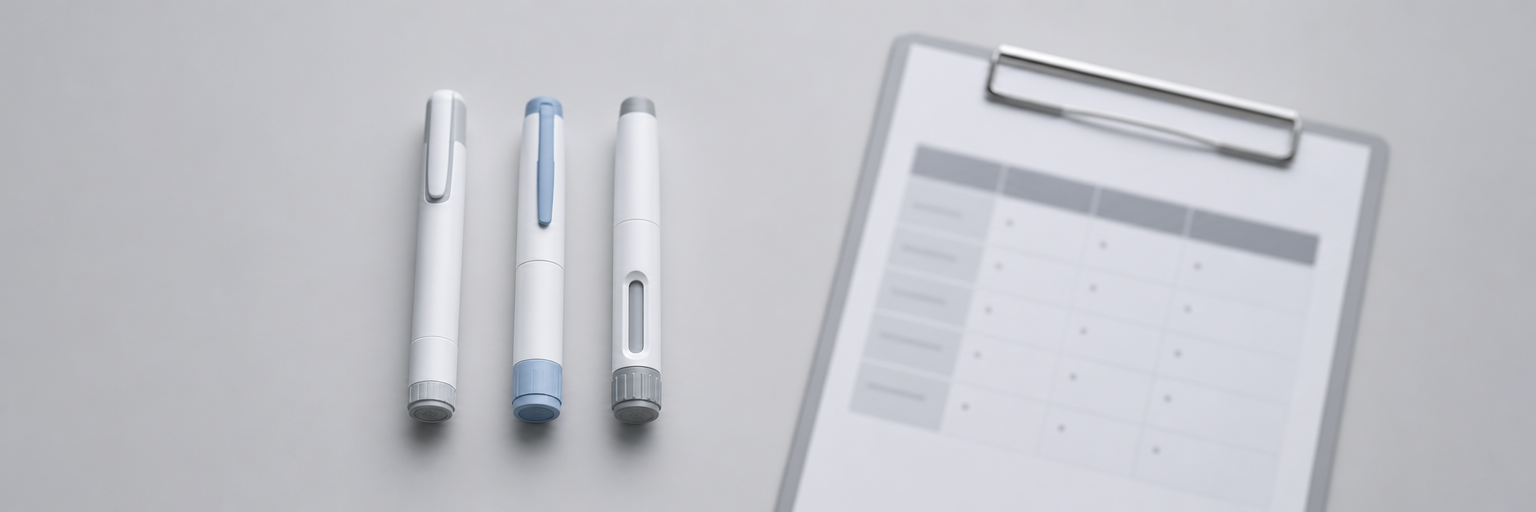
- Injection device preference. Wegovy and Ozempic use Novo Nordisk pen devices. Zepbound and Mounjaro use Eli Lilly pen devices, and Zepbound is also available in single-dose vials in some U.S. programs. Pen design matters more to some patients than others.
- Off-label realities. Ozempic and Mounjaro are FDA-approved for diabetes, so insurance coverage for weight loss alone is rare. Some clinicians still prescribe them off-label, but expect to pay out of pocket and to cap below the maintenance doses studied for obesity.
- When each is typically prescribed. A patient with type 2 diabetes plus obesity may end up on Ozempic or Mounjaro. A patient without diabetes meeting BMI criteria is more likely to be prescribed Wegovy or Zepbound. A patient with cardiovascular disease and obesity may be steered toward Wegovy for its FDA-approved cardiovascular indication. The 2024 ESSENCE (semaglutide) and SYNERGY-NASH (tirzepatide) trials added a new condition where these medications are clinically relevant — see fatty liver (NAFLD / MASLD) and weight loss for what the trials actually showed and how the drug data fits with lifestyle change.
- Hypertension as a coexisting target. Both classes produce 5 to 7 mmHg systolic drops at peak dose (STEP-1 and SURMOUNT-1), driven by the weight loss they produce. They are not stand-alone hypertension drugs, but they can meaningfully ease the BP medication burden in patients carrying both — see high blood pressure and weight loss.
For the broader landscape of approved options, see the prescription weight loss medications overview. If you are weighing medication against an operation, see bariatric surgery vs GLP-1 medications for an evidence-based side-by-side on expected loss, durability, and cost.
Safety and contraindications
All GLP-1 receptor agonists share a similar safety profile. The most important shared warnings:
- Boxed warning for thyroid C-cell tumors. All four drugs carry a boxed warning based on rodent studies. They are contraindicated in people with a personal or family history of medullary thyroid carcinoma (MTC) or multiple endocrine neoplasia syndrome type 2 (MEN2).
- Pancreatitis history. A prior episode of pancreatitis is a relative contraindication; discuss with your prescriber.
- Pregnancy and breastfeeding. These drugs are not recommended in pregnancy, while breastfeeding, or for people planning pregnancy in the near term. A washout period is recommended before conception.
- Gallbladder disease. Rapid weight loss raises the risk of gallstones; people with prior gallbladder disease should discuss risk with their clinician.
- Hypoglycemia risk. Mainly in people who also take insulin or sulfonylureas — dose adjustments may be needed for the other medications. See hypoglycemia and weight loss for symptoms, the 15-15 rule, and when to call a prescriber.
- GI side effects. Nausea, vomiting, constipation, and diarrhea are common, especially during titration. Dehydration from vomiting or diarrhea has been linked to acute kidney injury in some cases.
For a broader view of class safety, see weight loss drug safety, and for a deeper drug-specific look at side effects, see Ozempic side effects.
Frequently asked questions
Which GLP-1 causes the most weight loss? On published averages, tirzepatide (Zepbound at 15 mg) produced the largest loss — about 20–22% of body weight at 72 weeks in SURMOUNT-1 — followed by Wegovy at about 15% in STEP 1. Individual results vary, and the highest dose is not always the right dose for a given person.
What’s the difference between Ozempic, Wegovy, Mounjaro, and Zepbound? Ozempic and Wegovy are both semaglutide; Mounjaro and Zepbound are both tirzepatide. Within each pair, the difference is FDA-approved use (diabetes vs obesity), dose ceiling, and insurance pathway. The molecules within each pair are identical.
Is tirzepatide stronger than semaglutide? At the doses studied, yes on average. SURPASS-2 in diabetes and SURMOUNT-5 in obesity both showed greater weight reduction with tirzepatide. The dual GIP/GLP-1 mechanism is the leading explanation. Individual results still vary widely.
Which is cheapest without insurance? U.S. list prices for all four sit in the low four figures per month. Manufacturer direct-pay vial programs (such as the Eli Lilly Zepbound vial program) have made some doses cheaper than auto-injector pens. Cost without insurance is broadly similar across all four; the real difference comes from coverage.
Can I switch from one GLP-1 to another? Yes, under clinician guidance. Reasons include insurance changes, intolerable side effects, supply shortages, or a plateau. Never combine two GLP-1 medications, and do not switch on your own — your prescriber will choose a safe starting dose on the new drug.
Can I take a GLP-1 if I don’t have diabetes? Yes. Wegovy and Zepbound are FDA-approved specifically for chronic weight management in adults meeting BMI criteria. Ozempic and Mounjaro are diabetes drugs and are sometimes used off-label, though insurance rarely covers that use.
How much more weight do people lose on tirzepatide vs semaglutide on average? In SURMOUNT-5, the first dedicated head-to-head obesity trial published in 2025, adults on tirzepatide lost about 20% of body weight at 72 weeks compared with about 14% on semaglutide. The gap is largest at tirzepatide’s 15 mg dose and narrower at lower doses. Many people still reach their goals on semaglutide; the trial average is not a personal forecast.
How long do you have to stay on a GLP-1 to keep the weight off? Most current evidence points toward long-term, possibly indefinite use. In STEP-4 and SURMOUNT-4, people who stopped semaglutide or tirzepatide regained a large share of their lost weight within about a year, while those who continued maintained or kept losing. Treat these drugs as ongoing therapy for a chronic condition rather than a finite course, and plan for sustained cost, monitoring, and lifestyle support. For the trial-by-trial regain numbers, a stop-vs-taper-vs-maintenance-dose comparison, and the five levers that meaningfully change the regain curve, see rebound weight gain after stopping GLP-1.
What’s the difference between Ozempic and Wegovy specifically? The active ingredient is the same — semaglutide. The differences are FDA-approved use (Ozempic for type 2 diabetes; Wegovy for chronic weight management, and for cardiovascular risk reduction in eligible adults with obesity or overweight), maximum dose (2.0 mg/wk for Ozempic vs 2.4 mg/wk for Wegovy), and insurance pathway. For weight loss without diabetes, Wegovy is the on-label brand and is usually the easier coverage path.
Sources
Sources
- Once-weekly semaglutide in adults with overweight or obesity (STEP 1). New England Journal of Medicine (2021).
- Tirzepatide once weekly for the treatment of obesity (SURMOUNT-1). New England Journal of Medicine (2022).
- Tirzepatide versus semaglutide once weekly in patients with type 2 diabetes (SURPASS-2). New England Journal of Medicine (2021).
- Tirzepatide as compared with semaglutide for the treatment of obesity (SURMOUNT-5). New England Journal of Medicine (2025).
- Effect of continued weekly subcutaneous semaglutide vs placebo on weight loss maintenance (STEP 4). JAMA (2021).